A
global shift towards healthy and more plant-based diets, halving food
loss and waste, and improving farming practices and technologies are
required to feed 10 billion people sustainably by 2050, a new study
finds. Adopting these options reduces the risk of crossing global
environmental limits related to climate change, the use of agricultural
land, the extraction of freshwater resources, and the pollution of
ecosystems through overapplication of fertilizers, according to the
researchers.
The study, published in the journal Nature, is the first to
quantify how food production and consumption affects the planetary
boundaries that describe a safe operating space for humanity beyond
which Earth’s vital systems could become unstable.
“No single solution is enough to avoid crossing planetary boundaries.
But when the solutions are implemented together, our research indicates
that it may be possible to feed the growing population sustainably,”
says Dr Marco Springmann of the Oxford Martin Programme on the Future of
Food and the Nuffield Department of Population Health at the University
of Oxford, who led the study.
“Without concerted action, we found that the environmental impacts of
the food system could increase by 50-90% by 2050 as a result of
population growth and the rise of diets high in fats, sugars and meat.
In that case, all planetary boundaries related to food production would
be surpassed, some of them by more than twofold.”
The study, funded by EAT as part of the EAT-Lancet Commission for
Food, Planet and Health and by Wellcome’s “Our Planet, Our Health”
partnership on Livestock Environment and People, combined detailed
environmental accounts with a model of the global food system that
tracks the production and consumption of food across the world. With
this model, the researchers analysed several options that could keep the
food system within environmental limits. They found:
Climate change cannot be sufficiently mitigated without dietary
changes towards more plant-based diets. Adopting more plant-based
“flexitarian” diets globally could reduce the greenhouse gas emissions
of the food system by more than half, and also reduce other
environmental impacts, such as those from fertilizer application and the
use of cropland and freshwater, by a tenth to a quarter.
In addition to dietary changes, improving management practices and
technologies in agriculture is required to limit pressures on
agricultural land, freshwater extraction, and fertilizer use. Increasing
agricultural yields from existing cropland, balancing application and
recycling of fertilizers, and improving water management, could, along
with other measures, reduce those impacts by around half.
Finally, halving food loss and waste is needed for keeping the food
system within environmental limits. Halving food loss and waste could,
if globally achieved, reduce environmental impacts by up to a sixth
(16%).
“Many of the solutions we analysed are being implemented in some
parts of the world, but it will need strong global co-ordination and
rapid upscale to make their effects felt,” says Springmann.
“Improving farming technologies and management practices will require
increasing investment in research and public infrastructure, the right
incentive schemes for farmers, including support mechanisms to adopt
best available practices, and better regulation, for example of
fertilizer use and water quality,” says Line Gordon, executive director
of the Stockholm Resilience Centre and an author on the report.
Fabrice de Clerck, director of science at EAT says, “Tackling food
loss and waste will require measures across the entire food chain, from
storage, and transport, over food packaging and labelling to changes in
legislation and business behaviour that promote zero-waste supply
chains.”
“When it comes to diets, comprehensive policy and business approaches
are essential to make dietary changes towards healthy and more
plant-based diets possible and attractive for a large number of people.
Important aspects include school and workplace programmes, economic
incentives and labelling, and aligning national dietary guidelines with
the current scientific evidence on healthy eating and the environmental
impacts of our diet,” adds Springmann.
相較於太陽能及風力發電,潮汐發電的好處在於其發電量是「可預測的」,據 BBC 報導,一些電力業者也認同這項計畫,因這種「可預測的」發電模式,可讓其與現有電網併網發電時,較容易運作。
此外,對於外界擔憂潟湖發電廠恐影響當地生態,潮汐潟湖電力公司則不諱言「一些回游魚群可能會游入渦輪裡」,但預計為數極少,且該公司表示,海牆可充當人工魚礁,作為魚群的棲息地。
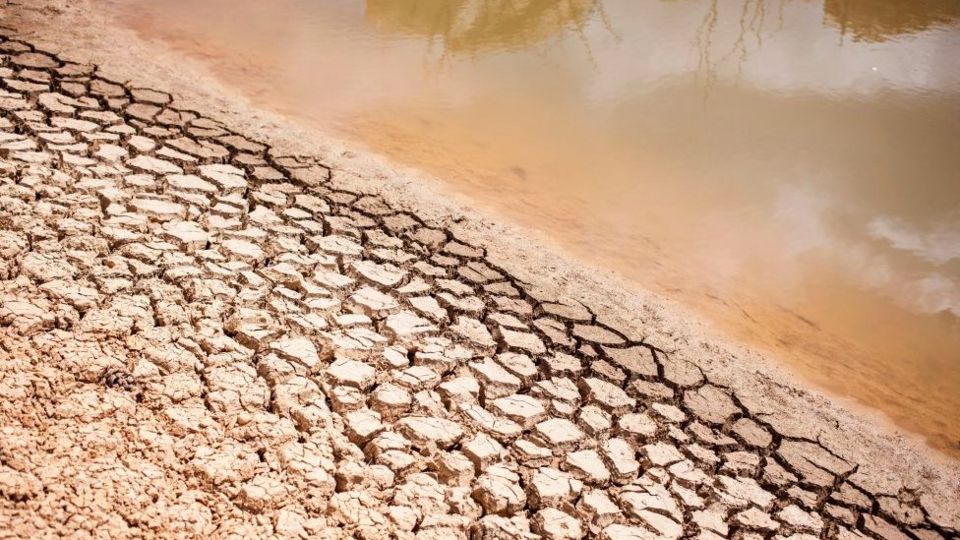
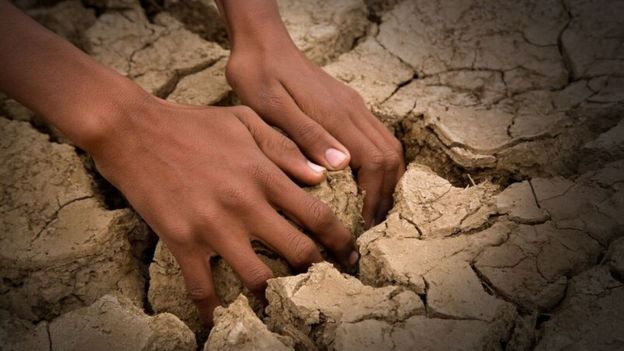
This picture shows scorched earth and low water levels in South Africa, as a result of draughts
Scientists studying the effects of climate change have warned that we need to make massive changes to the way that we live our lives in order to tackle the problem of global warming.
They've also said that we need to do more than we previously thought we did.
A target was in place for us to try to stop the world's temperature from rising by any more than 1.5°C. Not only are we not meeting that target, but the report suggests that the world is in fact heading for a 3°C increase in temperature.
This could have huge consequences for the planet and experts are calling on world leaders to tackle the problem urgently.
According to the report - which has taken scientists three years to put together - keeping the temperature rise to under 1.5°C will require "rapid, far-reaching and unprecedented changes in all aspects of society".
It explains that time is running out and it will be hugely expensive, but the opportunity to do something is still possible - if action is taken now.
What do they say we need to do?
In the report, scientists outline steps we can take to help the world's temperature to stay under the 1.5°C target.
These include:
The amount of CO2 being emitted into the atmosphere around the world needs to go down by 45% from 2010 levels by 2030
85% of the world's electricity needs to be produced using renewable energy (e.g. wind farms)
We need to stop burning coal as an energy source
To enjoy the CBBC Newsround website at its best you will need to have JavaScript turned on.
Scientist warning over climate change and global warming
What happens if we don't take action?
Basically, they say it would be very bad news for the planet.
Coral reefs would be wiped out with a 2°C increase in temperature and global sea-levels will rise around 10cms, which would increase the risk of flooding for millions of people around the world.
The ability to grow certain crops like rice and wheat could also become more difficult.
The report says hard decisions can't be ignored anymore and governments need to take more action "immediately".
Is this a new issue?
The short answer is, not at all.
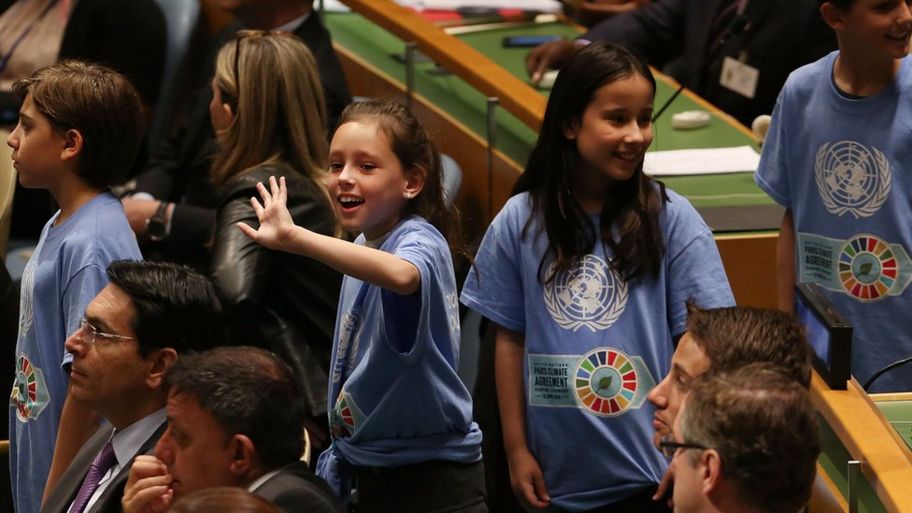
Back in 2015, leaders from 195 countries around the world got together to sign something called the Paris Agreement, which was a huge international deal making promises to do something about climate change.
Getty Images
Children from around the world stood alongside world leaders and country delegates at a signing ceremony for the Paris Agreement
One of the big things that leaders agreed was to take steps to stop global temperature increasing by more than 2°C - and to try to limit it to 1.5°C.
But one of the heads of this new study Prof Jim Skea believes that we now need to go further than what was agreed in the Paris deal. "Just fulfilling the pledges made in the Paris agreement for 2030... is not good enough," he said.
Watch this video from 2015 which explained the issues around climate change ahead of the Paris agreement being signed.
To enjoy the CBBC Newsround website at its best you will need to have JavaScript turned on.
WATCH: Newsround's quick guide to climate change (2015)
In August 2018, a big report was published about something called Hothouse Earth conditions.
The international team of climate researchers behind the report explained how they believed the world is at risk of tipping into extremely dangerous levels of climate change - 'Hothouse Earth conditions' - when some parts of the Earth could actually become unsuitable for people to live in anymore.
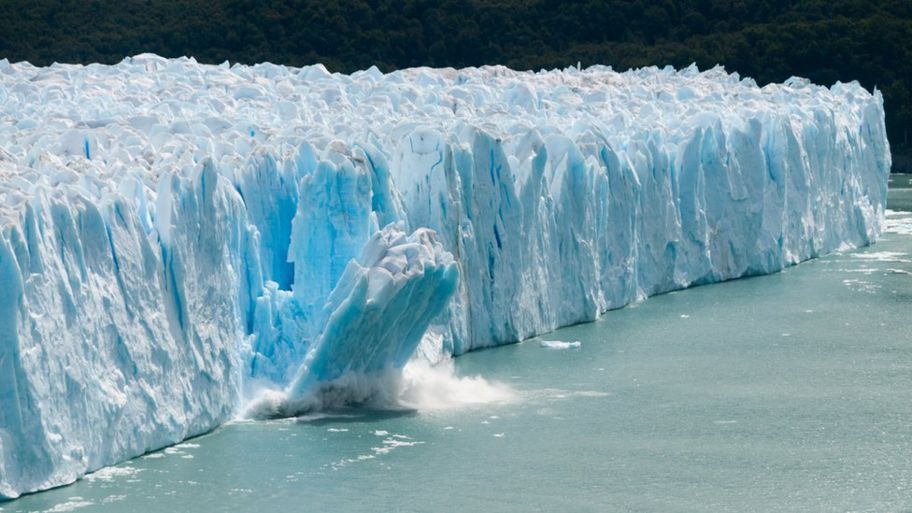
They said current global warming could lead to sea levels being between 10-60m higher than they are today, flooding large areas of land.
Getty Images
The Hothouse Earth report talked about how melting ice sheets would cause sea levels to rise significantly.
They also explained how forest, oceans and land which currently work to soak up about 4.5 billion tonnes of carbon (they get called 'carbon sinks' because of this) could actually start to emit carbon themselves, increasing the world's temperature even more.
Overall, the report - published in the Proceedings of the National Academy of Sciences - said warming could lead to a higher global temperature than at any time in the past 1.2 million years.
It also suggested that humans had possibly underestimated how sensitive the Earth is to warming.
One of the scientists involved in the report - Prof Rockstrom from Stockholm Resilience Centre - explained how the recent heatwaves and extreme conditions around the world may be helping to show how quickly and dramatically things can change.
EPA
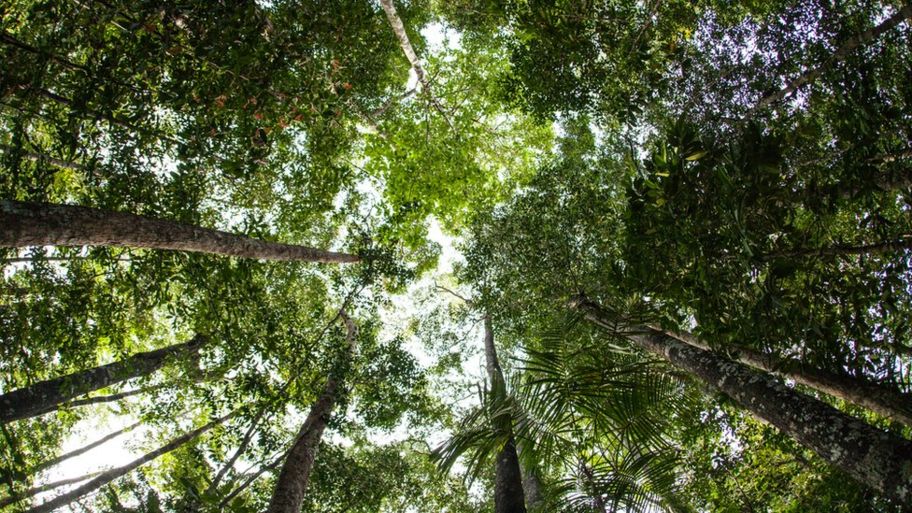
Experts have said that there are many steps humans can take to help to reverse the effects of global warming, such as planting more trees
The issue is that, while the biggest impacts of all this may not be felt for hundreds of years, once it starts, we won't really be able to do anything about it - so experts say it's important we take steps now to stop the 'Hothouse Earth' situation from happening.
The report included some pointers about how countries might do this, including:
Stop burning fossil fuels by the middle of this century
Planting more trees
Protect forests
Work out how to block the Sun's rays
Develop machines to suck carbon out of the air
While many scientists say their conclusions are sound, not everyone agrees with what they have written. Some experts say that the picture painted by the Hothouse Earth report is too extreme.
But one thing that everyone seems to agree on at the moment is that humans need to make some big changes in order to protect our planet.
What can YOU do to help?
There are several things that you can do at home to do your bit to protect the planet.
Here are five things to get you started!
Plant trees - Whether it's in your garden or getting involved in planting trees around your local area, the more trees, the better!
Shop responsibly - Buy less meat, milk, cheese and butter and more locally sourced seasonal food. Unnecessarily flying food products around the world is a source of CO2 emissions.
Don't be wasteful - A huge amount of food is chucked away every single day. Be more savvy with your food waste - could you make it into something else?
Travel smart - Transport is a huge factor in carbon emissions, so think about more green ways to travel. If it's a short distance, could you walk or cycle? If it's slightly further, could you take a train or a bus, instead of driving? Do you know any adults who drive petrol or diesel cars - could you tell them about electric ones?
Save energy - We could all probably use less electricity around the house. Is it nice weather outside? Could you hang the washing out to dry rather than use a tumble dryer? Do you really need to leave all of those lights switched on? Do you really need to have the heating on or could you put on another jumper? Has your house got good insulation? All of these considerations help to save electricity and - therefore - the planet.